
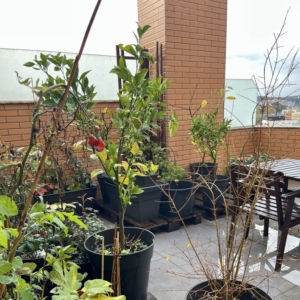

One season of learning.
As the buds on my trees begin to swell and the first 2026 leaves start peeking out, my grower’s restlessness returns. Perhaps it is the longer days, or simply the sun appearing more often, but the familiar urge is back: browsing gardening websites, scanning nursery catalogues, quietly planning the coming season.
But after this long pause — partly winter, partly life — I realised I didn’t want to return to this blog with a planting guide or a curated success story. I wanted to return with honesty. The 2025 season was not a failure… but it was humbling. Rooftops do not forgive assumptions. Here is what I learned:
Lesson #1: Companion Planting Might Not Translate Well to Pots
I had read plenty about companion planting. For someone with limited space, it sounded perfect: two crops sharing the same pot. I decided to start with what looked like an easy combination: tomatoes and garlic.
On paper it made sense: two crops in one container, tomatoes with deeper roots, garlic with shallower ones, garlic reputed to deter certain tomato pests and, conveniently, a pairing that I use often in the kitchen
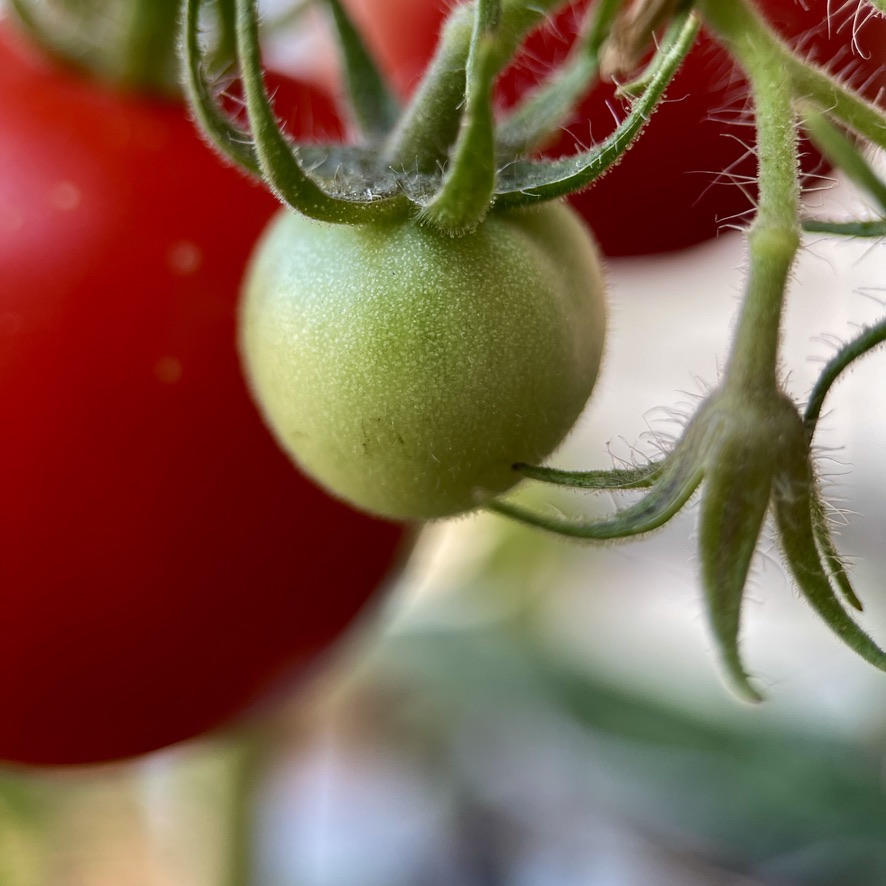
I planted three cherry tomato plants — which I lovingly called the three sisters — in a 74 × 34 × 34 cm container (29 × 13 × 13 in), about 80 litres (± 21 gallons) of substrate, with garlic cloves spaced roughly 10 cm apart. At first everything looked promising. The garlic shoots emerged quickly and grew steadily. But about a month later the tomatoes began fighting for root space, and those supposed “companions” quickly became competitors inside a confined system.
Lesson learned: what works in open soil does not automatically work in a container. Roots do not negotiate politely when space is limited.
In 2026: I will plant two cherry tomato plants instead of three in this container. I will still plant garlic, but not as a companion crop — rather for its potential pest-deterrent effect. And no, I’m not abandoning companion planting entirely, I’m just approaching it with more scepticism.
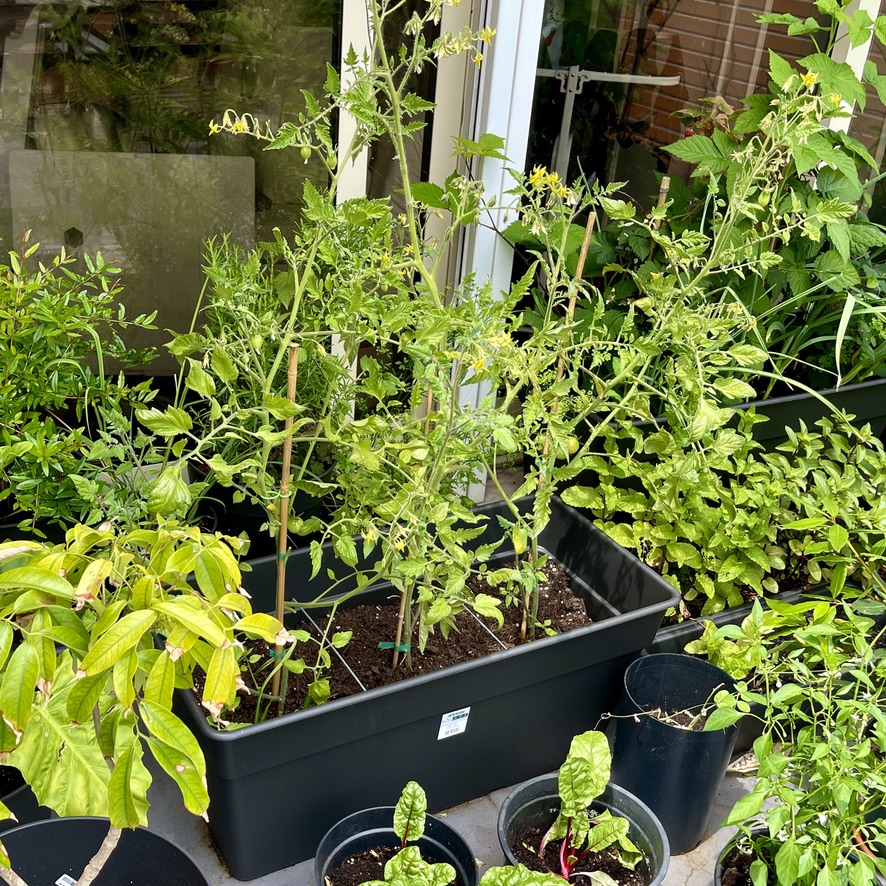
Lesson #2 – Even in Large Pots Plants Tend to Prefer Single Occupancy
Many gardening websites claim you can grow tomatoes in pots around 25–30 cm (10–12 in) wide and deep. On a rooftop, however, summer conditions are far from typical garden conditions.
Temperatures on my rooftop regularly reach 40–45°C (104–113°F) during peak summer. Because larger soil volumes buffer temperature fluctuations better, I decided to use much bigger containers, assuming that the extra space would allow plants to share comfortably.
From a human perspective, the container looked generous. From a root perspective, clearly not. As mentioned earlier roots do not negotiate politely — they colonise. Even in large containers I observed uneven growth, silent competition for nutrients, and subtle differences in plant vigour. Some plants thrived while others lagged behind despite receiving the same watering and sunlight.
Plants, it turns out, are less social than gardening books sometimes imply.
Lesson learned: On rooftops, individual pots create individual control.
In 2026: the scientist in me cannot resist running a small experiment. I will plant two cherry tomato plants together in the larger container mentioned previously, and two others individually in separate 42-litre pots. All will receive garlic cloves for pest deterrence, and I will monitor plant height, stem strength, tomato size, and weekly production. Let’s see what the data says.
Lesson #3 – Big Containers Are Not Uniform Ecosystems
This one genuinely surprised me. In the same large container I planted two blueberry plants, using an acidic substrate and regularly checking the soil pH. Yet one side of the container thrived while the other struggled.
Same pot. Same watering. Same sun.
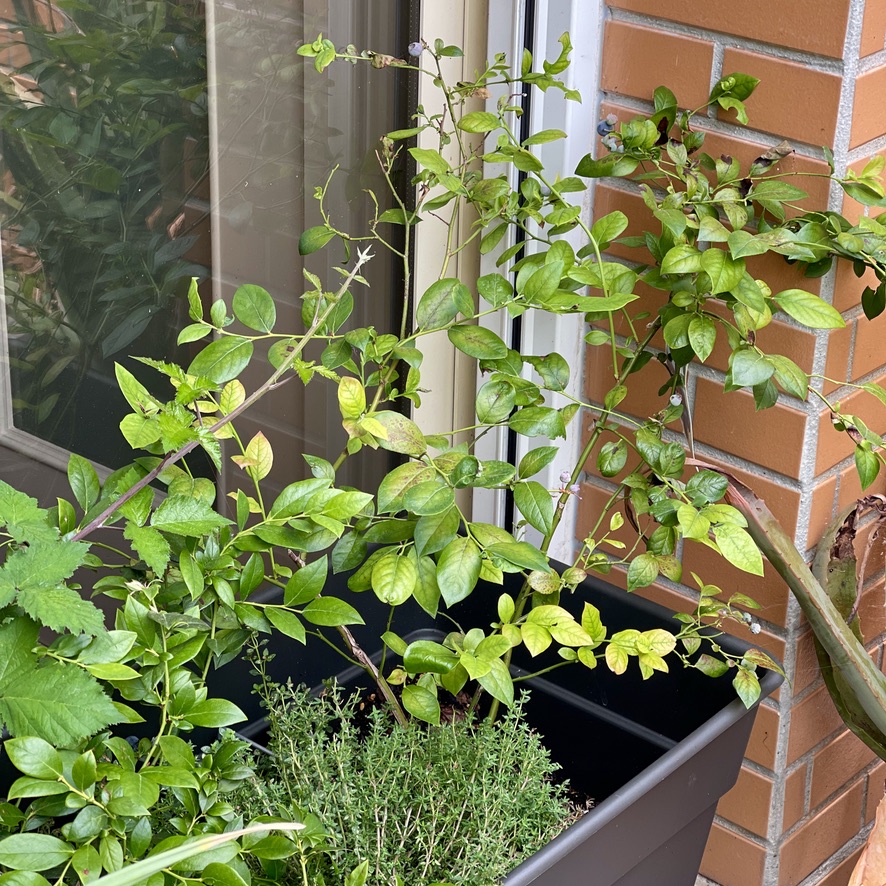
Eventually I repotted the struggling plant into a 25-litre container, and it is blooming at the moment — clearly much happier. What puzzled me even more was that the plant that had originally been thriving in the shared container later declined and died over the following months. When I emptied the pot to investigate, I found no obvious explanation: no waterlogging, no root obstruction, and no visible pests.
The most plausible explanation is that rooftop conditions — wind exposure, shifting sun angles, and reflected heat — created different microclimates within the same container. Large pots may look like single environments to us, but below the surface they can behave like multiple small ecosystems competing with each other. Perhaps maintaining the acidic conditions blueberries prefer is simply easier in smaller, more controllable pots. I cannot prove exactly what happened. But the lesson was clear.
Lesson learned: never assume internal homogeneity. Always inspect both sides of a container.
In 2026: the surviving blueberry will remain in its own pot, upgraded to a 42-litre container as it has grown substantially since last year. The large container will now be repurposed for a second tomato experiment, this time using the Chucha tomato (Chico III) variety, a small plum-type tomato.
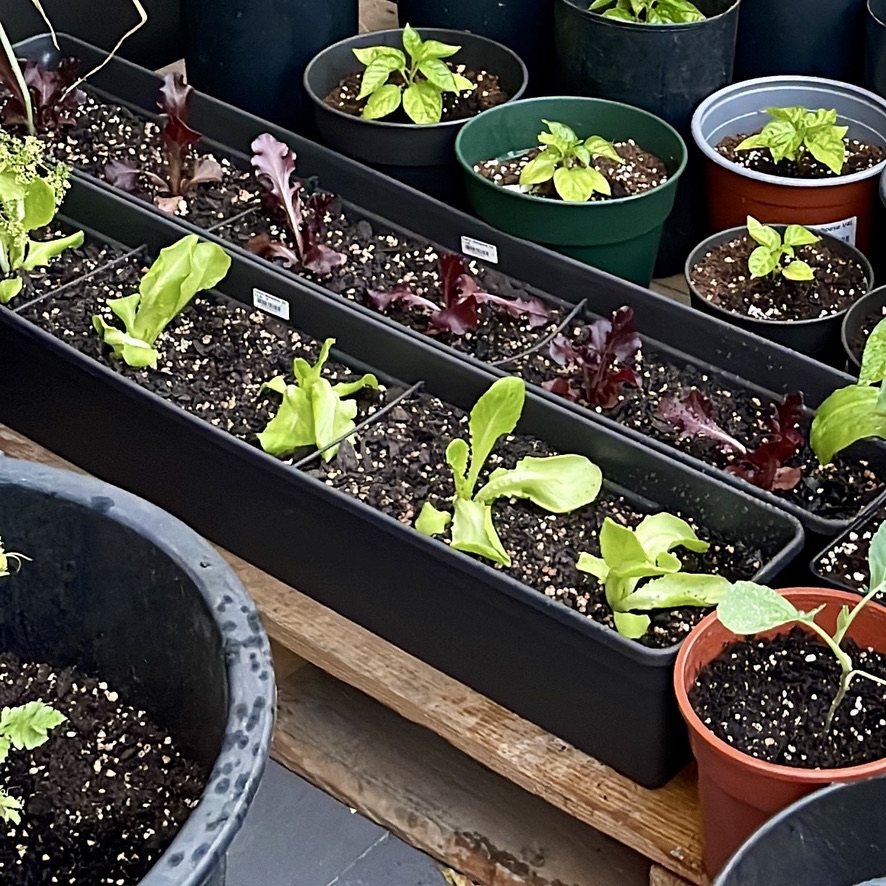
Lesson#4 – Small Pots (<20 cm Deep) Are Almost Useless on a Rooftop
In garden beds or at ground level, plants with shallow roots can often survive. On a rooftop, the rules change. Wind exposure + intense sun + reflected heat = rapid dehydration. Roots need vertical depth not only for nutrients, but also for temperature stability and oxygen balance. Shallow containers simply cannot buffer these extremes. As I learned the hard way, shallow pots heat up too quickly and dry out too fast. On hot summer days I sometimes found these pots completely dry again by mid-afternoon, even when they had been watered in the morning.
Lesson learned: depth equals resilience.
In 2026: I will reserve these smaller pots for plants that tolerate rapid drying, such as mint (see my earlier post) and other pollinator-attracting flowers. They will be placed strategically across the rooftop to support pollinators while reserving deeper containers for crops that require more stable root conditions.
Lesson #5 – Shade Is Not Optional in Peak Summer
Full sun is romantic. Rooftop full sun in July and August is brutal. On the hottest days, if I need to water in the afternoon I either wear flip-flops or gardening shoes — or I have to cool the tiles with cold water before I can even step on them.
Last year I had not planned for shade. As temperatures climbed, I found myself constantly moving pots around the rooftop searching for tolerable conditions. Most plants clearly preferred the areas that received afternoon shade, even those usually described as “sun-loving”. I also ended up repotting my fruit trees three times during the season, simply to give their roots enough soil to buffer the heat.
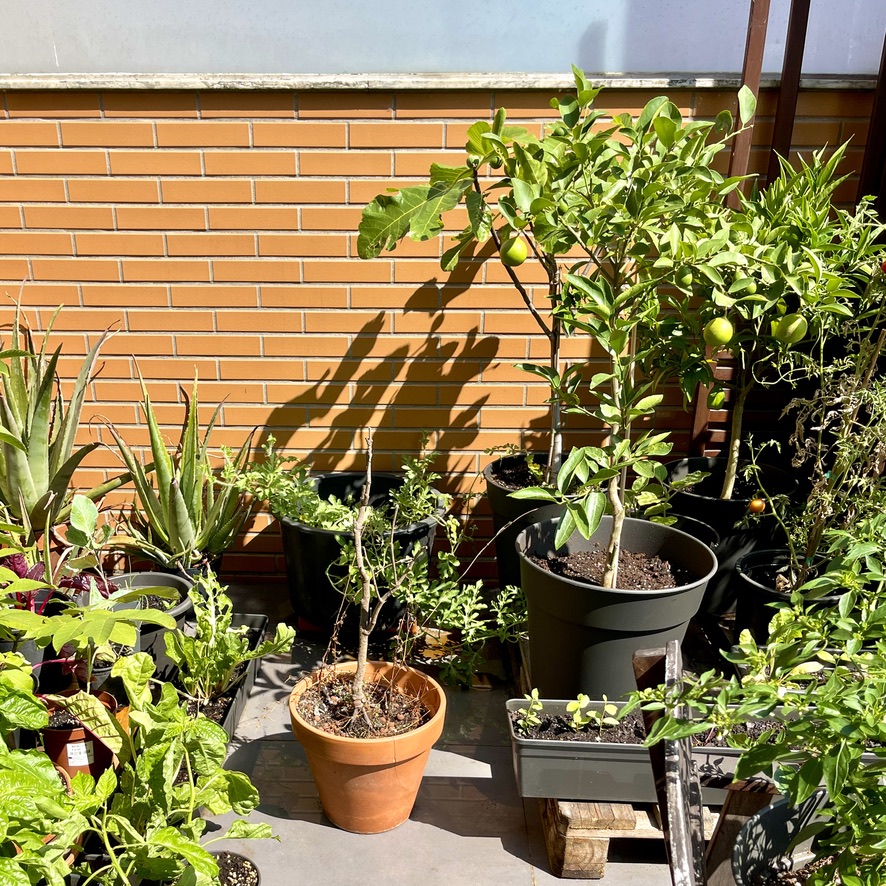
Lesson learned: shade is not weakness — it is climate management.
In 2026: I will install a simple shade sail using shade cloth covering roughly two-thirds of the rooftop. This should distribute shade more evenly instead of forcing every plant into the small portion of the terrace that currently receives afternoon protection. For gardening purposes, shade cloth does not need to block all sunlight. A 30–40% shade cloth usually works well: it softens the most aggressive summer radiation while still allowing enough light for plants to grow. I will likely choose a beige or green fabric, which softens the light while keeping the space pleasant to look at.
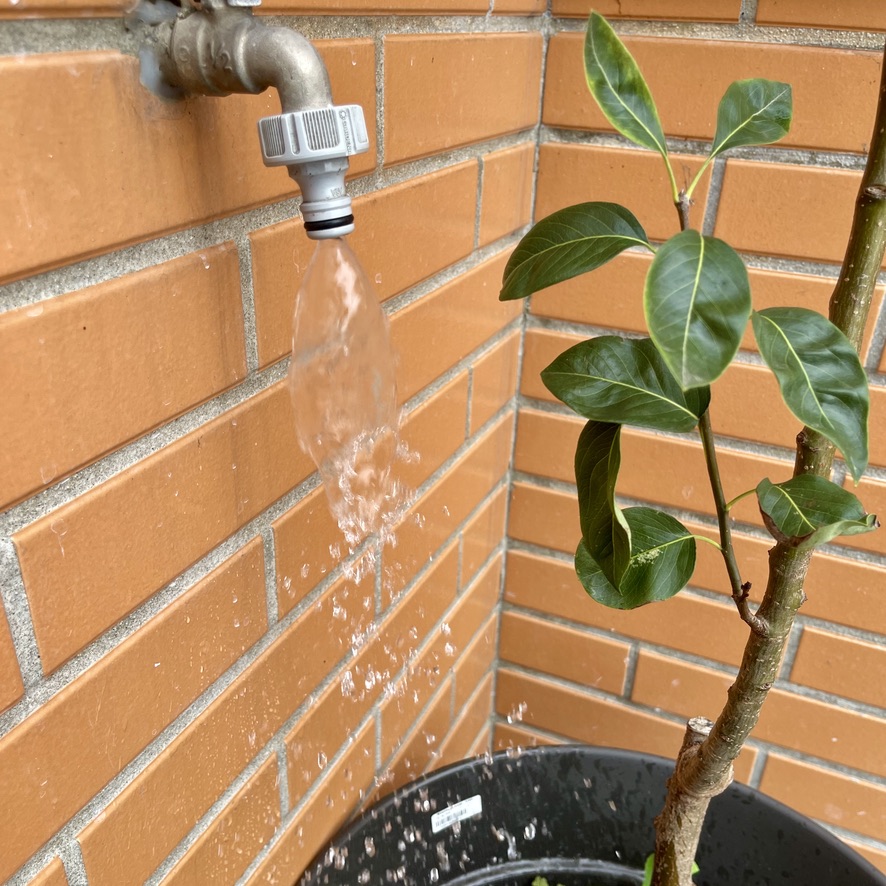
Lesson #6 – Morning Watering Wins
Evening watering felt convenient. After a hot day or a long workday, I could unwind with what felt like a kind of inland thalassotherapy: watering the plants, inspecting leaves, and checking for problems at my own pace.
But more often than not I was greeted by sad-looking plants, their leaves drooping dramatically and their tops hanging limp. After watering they would slowly recover, but it often took hours. One plant in particular was especially theatrical. I called her the drama queen — my pomegranate tree.
When I changed my routine and began watering in the early morning, the difference was surprising. Not only did the drama queen behave better, but most of the other rooftop residents did too. Plants stood taller, leaves looked firmer, and growth noticeably improved. Morning watering proved superior because:
- plants hydrate before the day’s heat stress begins
- leaves dry quickly in daylight, reducing fungal risk
- roots absorb water while the plant’s metabolism is active
Lesson learned: water before the heat arrives, not after the damage is done.
In 2026: I will treat early-morning watering as a small daily ritual — a moment to check the garden, plan the day, and start the morning slowly… preferably with a cup of freshly brewed coffee.
Lesson #7 – Vigilance Beats Intervention
This may be the hardest lesson of all. Although I performed daily inspections, I realised that sometimes — more often than I would like to admit — I was looking but not truly seeing.
Some pests have an incredible ability to blend with the background, and what appears to be a beautiful green branch may in fact be covered with tiny creatures quietly sucking the life out of your plants. Aphids were particularly good at this.
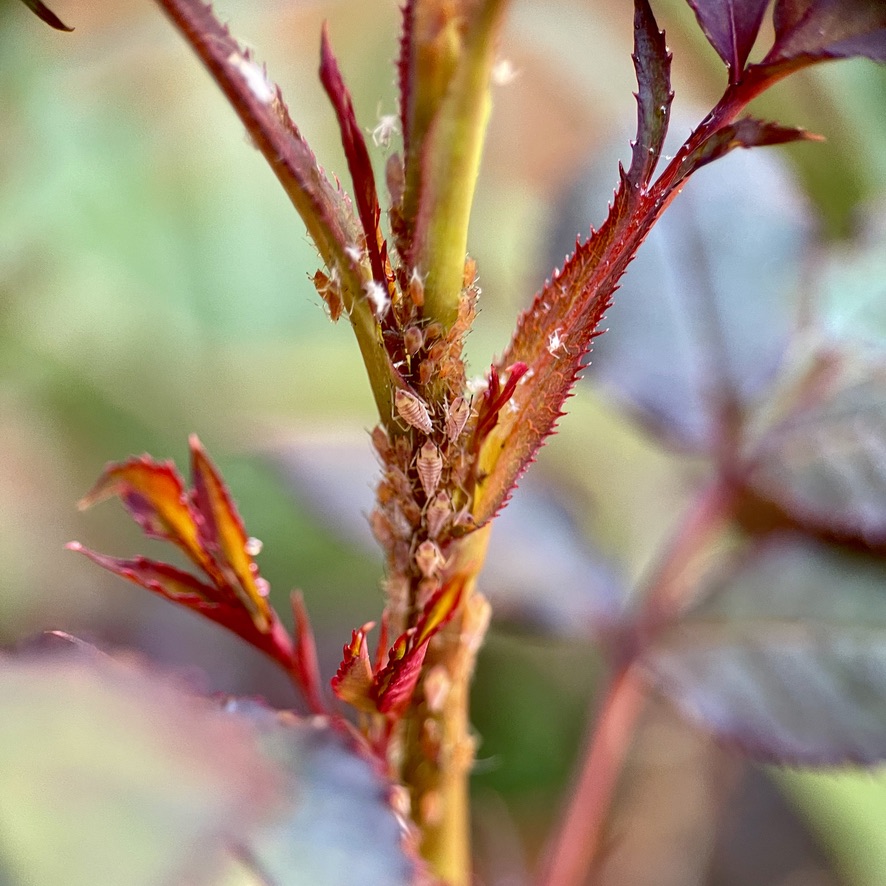
Problems usually begin subtly: a slight leaf curl, uneven colour, or one stressed branch. At first I blamed nutrient imbalances, questioned the quality of the soil, or wondered whether I had watered too much or too little. But after closer inspection I realised the real issue. Predators come in all forms and sizes, and they hide everywhere — under leaves, inside curled leaves, along stems, and even on the soil surface. They occupy every nook and cranny of the garden.
If caught early, these little invaders are usually manageable. Ignore them for a week, however, and the situation escalates quickly. What could have been solved in minutes may suddenly feel overwhelming.
Lesson learned: rooftop gardening rewards daily attention and punishes complacency.
In 2026: I will continue my daily rooftop walks, but this time with my gardener’s glasses on — inspecting a few leaves on each plant and dealing with problems as soon as they appear.
Closing Reflection
As I shared with you in this “What the 2025 Rooftop Gardening Season Taught Me (The Hard Way)” post, the last season was not about abundance. It was about calibration. Rooftops are extreme environments. What works at ground level often behaves very differently several floors above it. And perhaps the most important lesson is this:
You cannot impose traditional garden logic onto a rooftop. You must learn to observe, adapt, and work with rooftop logic instead.
What about you?
Did your garden teach you any lessons in 2025? I would love to hear about them!
